Welcome To KFUPM Physics

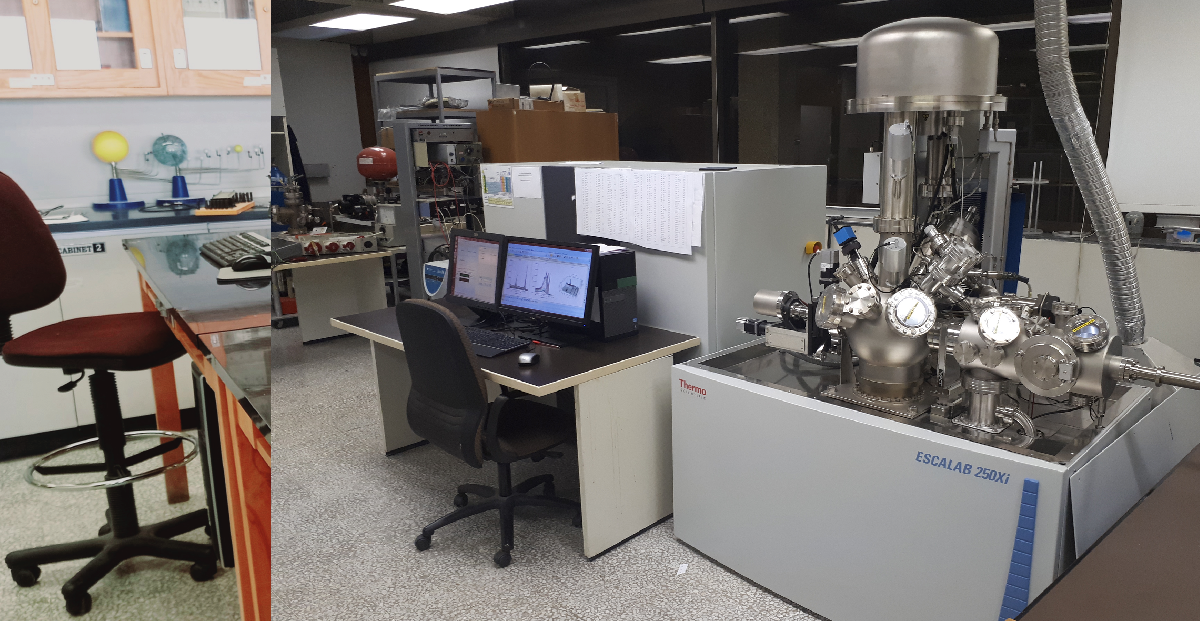
Welcome to the Department of Physics at King Fahd University of Petroleum and Minerals. I invite you to explore our website where you can find information about our academic programs, courses, research activities, and faculty members. Physics has always been at the forefront of exploration. This is accomplished through cognitive enhancement by education transmitted through academic courses as well as carrying out research at the cutting-edge frontiers of human knowledge. The Physics department offer courses that are solidly based on the American system to meet international quality assurance requirements, which has placed the Department as a world-class regional center in a leading international institution. Our student body includes pure-physics students and double-major students, which reflects the interdisciplinary nature of our program. In addition, our research facilities span various fields of physics including condensed matter physics, lasers, materials research, magnetism and superconductivity, nuclear physics, and nonlinear and computational physics. Over the past five decades, our faculty members have conducted research using in-house facilities as well as collaborative research with national and international centers.

Mohammad Al-Kuhaili,
Professor & Chairman, Physics Department

Research and Academic activity statistics 2015 to 2021

3.1

Average Impact Factor Publications​

51

Patents

10042

Cumulative Citation Count​

452

Publications

Recent News

View all news

Recent Events

View all events
Seminar

SEMINAR

Design and Structure of Nano Spinel Ferrite Based Electrodes for High Performance Supercapacitor Applications
Speaker:
Ms. Amirah Alqarni
Regular PhD Student
Date: Monday, 20 April 2026
Time: 11:00 a.m. – 11:20 a.m.
Location: Bldg. 6/Room 125

Abstract:
This work focuses on the development of nano spinel ferrite-based electrodes to enhance supercapacitor performance. Spinel ferrite nanoparticles are utilized due to their high conductivity, large surface area, and low cost. The materials are synthesized using a hydrothermal method with different doping ratios, and their electrochemical performance is evaluated using various techniques. The results demonstrate improved capacitance and excellent cycling stability, indicating that vanadium-doped spinel ferrites are promising candidates for advanced energy storage applications.


SEMINAR

Deutsch’s Algorithm: The First Demonstration of Quantum Advantage

Speaker:
Mr. Muhammed Umer
Regular PhD Student
Date: Monday, 20 April 2026
Time: 11:20 a.m. – 11:40 a.m.
Location: Bldg. 6/Room 125

Abstract:
Deutsch's algorithm, proposed by David Deutsch in 1985, was the first quantum algorithm to demonstrate a clear computational advantage over classical methods. The problem is simple: given an unknown binary function f:{0,1}→{0,1}, determine whether it is constant (f(0)=f(1)) or balanced (f(0)≠f(1)) using as few evaluations as possible. Classically, this requires two function calls, one for f(0) and one for f(1). Deutsch's algorithm accomplishes the same task with only a single query by exploiting quantum parallelism and phase kickback. The algorithm prepares a superposition of both inputs, applies the quantum oracle U_f once, and uses interference to extract the global property. A final measurement reveals with certainty whether the function is constant or balanced. Though simple, Deutsch's algorithm illustrates the core principles of quantum computing; superposition, interference, and quantum parallelism, and laid the foundation for later algorithms such as Deutsch–Jozsa, Shor's, and Grover's. This seminar will present the circuit, walk through the state evolution, and discuss its historical significance.
 
All faculty, researchers and students are invited to attend.

    Location and Time
  • 6-125

  • 20 Apr, 2026

  • 11:00 AM - 12:00 PM